Argireline is one of the best-known cosmetic peptides. It's in serums and eye creams that aim to soften the look of expression lines on the forehead and around the eyes. This guide covers what it is, how cosmetic formulators use it, and how to mix and store a DIY serum safely.
What is Argireline?
Argireline is the common trade name for acetyl hexapeptide-8 (INCI; also listed as acetyl hexapeptide-3, CAS 616204-22-9). It's a short chain of six amino acids, made in a lab and acetylated to keep it stable. The raw material is a white, water-soluble powder. It suits water-based serums, gels and light lotions.
Cosmetic makers usually buy it as a dilute trade solution, which is why retail labels say things like "Argireline 10%". That 10% refers to the solution, not the pure peptide. In pure peptide terms, most retail serums contain around 0.005%. Our powder is the pure peptide, so you need only a very small amount.
How is it used in cosmetics?
Argireline is added to leave-on products for areas where expression lines show: the forehead, between the brows and the outer eye area. Brands describe it as helping skin look smoother and more relaxed. It works best in a simple, hydrating base such as hyaluronic acid and glycerin, applied consistently over several weeks.
- Typical use level: 0.005–0.05% pure peptide in the finished product.
- pH: 5.0–6.5 is comfortable for the peptide and for skin.
- Pairs well with: hyaluronic acid, glycerin, panthenol, niacinamide, and other peptides such as SNAP-8 and palmitoyl pentapeptide-4.
- Keep apart from: strong acids (low-pH AHA/BHA toners) applied at the same time, and vitamin C (L-ascorbic acid) serums at very low pH. Use these at different times of day.
DIY serum: mixing a 30 mL bottle
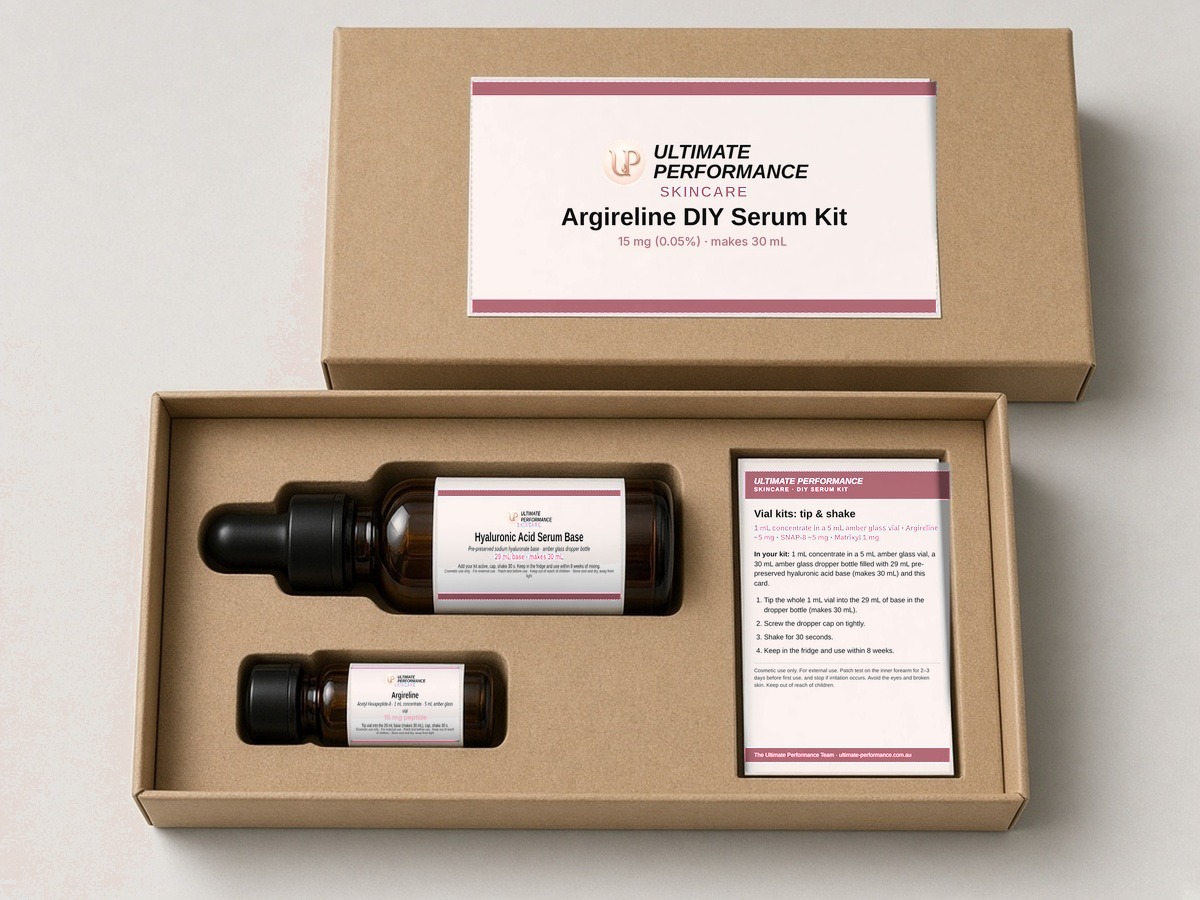
Our Argireline DIY Serum Kit includes 15 mg Argireline powder (0.05% in 30 mL, supplied as a 15 mg sachet), two 15 mL amber jars of hyaluronic acid base (20 mL in total), 5 mL glycerin, 0.5 mL preservative, an empty 30 mL amber glass dropper bottle with pipette, a 5 mL syringe, pH strips and a how-to card (makes 30 mL). The powder is pre-weighed, so there's nothing to weigh. You mix it with the glycerin, HA base and preservative, then check the pH. If you're using loose powder instead, you'll need a 0.001 g scale.
- Wash hands. Wipe the bench, bottle and syringe with 70% isopropyl alcohol and let air-dry.
- Empty the peptide sachet into the 30 mL dropper bottle (tap the sachet so no powder is left).
- Add the 5 mL glycerin and swirl for 30 seconds.
- Add the 20 mL hyaluronic acid base with the syringe. Cap and roll gently for 1–2 minutes until clear. Do not shake hard.
- Add the 0.3 mL preservative (1%) and roll again.
- Check pH with a strip: aim for 5.0–6.5. Write the date made on the bottle label.
- Keep the bottle in the fridge and use within 8 weeks.
Storage
Keep the unopened powder sealed, dry and in the fridge (2–8 °C) with its desiccant. Let the jar warm to room temperature before opening so moisture doesn't condense inside. Keep mixed serum in the fridge, out of light, and use it within about 8 weeks. Throw it out if it turns cloudy, changes colour or smells off.
Patch testing
Before your first full use, apply a small amount to the inside of your forearm or behind your ear once a day for 2–3 days. If you get redness, itching, stinging or swelling, stop and wash it off. Don't use it on broken, sunburnt or irritated skin, and keep it out of your eyes. If you're pregnant, breastfeeding or have a skin condition, check with your GP or pharmacist first.
What the evidence says (honest summary)
Argireline has been studied as a cosmetic ingredient since the early 2000s. Manufacturer studies and a few small published trials report that, after several weeks of twice-daily use, people saw a smoother-looking skin surface and less visible expression lines than with a placebo cream. These studies are small, often funded by ingredient makers, and measured surface appearance only. Results vary from person to person and fade when you stop using the product. Argireline is a cosmetic, not a substitute for any medical or clinic treatment, and we make no claims beyond appearance.
FAQ
How long until I notice a difference?
Most cosmetic studies assess results at 4 to 8 weeks of consistent twice-daily use. Take photos in the same light so you can compare honestly.
Is more better?
No. Going above about 0.05% pure peptide isn't shown to improve the look of skin, and it wastes powder. Stick to the kit amounts.
Can I use it with GHK-Cu?
Yes. Many people use GHK-Cu at night and Argireline in the morning, or layer them, the water-based one first.
Can I use it around my eyes?
You can apply it to the orbital bone area, but not on the eyelids or into the eyes. Rinse with water if any gets in.
Is it vegan?
The peptide is synthetic and contains no animal ingredients. Check the other ingredients in your base.
Is this for injection?
No. All of our skincare products are for topical cosmetic use only.
Every peptide we use is independently lab-tested for identity and purity before it goes into our creams and serums. For laboratory research materials, see Ultimate Peps; lab testing is available from QLD Analytical (Queensland, Australia).
For topical cosmetic use only. Not intended to diagnose, treat, cure or prevent any disease. Individual results vary. — The Ultimate Performance Team